Training without a needs analysis
A course that worked for others can look appealing. A needs analysis helps you judge whether it suits your group.
We assess the needs of your workplace and measure the factors that matter most for the group. The results shape the training. We support employees in applying what they learn in their daily work, re-assess, and so help results last.
 360° ThinkingHow do we make use of different perspectives at work?The assessment shows how people approach tasks and decisions.The results help improve communication and collaboration.View the assessment
 360° GritWhere does stamina run out in long-term projects?The assessment shows which factors can be strengthened to sustain motivation and stamina.The results help build the group’s grit in a targeted way.View the assessment
 360° Emotional IntelligenceHow do we respond when the pressure is on?The assessment gives a clear view of eight key factors of emotional intelligence.The results help strengthen the group’s insight and self-knowledge.View the assessment
 360° WellbeingAre results achieved at the expense of your people?The assessment brings together eight factors of wellbeing and balance.The results help build a solid foundation for the future.View the assessment
Training costs time and money. We start by identifying where each group’s needs are greatest and focus the training on the challenges employees face in their daily work.
A course that worked for others can look appealing. A needs analysis helps you judge whether it suits your group.
Pre-set content can repeat what some people already know. Others then get less time to practise what they need to develop.
Without follow-up, new skills are easily lost in the rush of daily work. Practice on the job helps employees embed them, and re-assessment shows what has changed and where further support could help.
Profectus has worked by these five steps for about a decade.
Profectus is the authorised agent for 360° HPM (Human Performance Management) in Iceland. We help workplaces assess needs, interpret the results and use them in training and follow-up. The questionnaires for the assessments on offer are available in Icelandic.
Choose an assessment based on what you want to understand better about the group. Each participant receives a personal report, and a group map is an add-on for working with the group.
Maps different thinking styles. Eight dimensions, grouped into four categories, show the routes people prefer when solving problems and making decisions.
Measures eight factors linked to sustaining interest and working purposefully towards long-term goals.
Shows how people notice, understand and respond to their own emotions. The assessment also sheds light on how people understand and respond to the emotions of others.
Gives an overview of eight factors of wellbeing and helps identify where support for employees could be useful.
Measures the current state of ten factors of workplace culture and job satisfaction. Three open questions add explanation and context, giving managers a basis for prioritising action.
For HR professionals, consultants and others who want to be certified to offer and use 360° Thinking, 360° Grit and 360° Wellbeing in their work.
Profectus is the Master Trainer for Iceland, certified to train and graduate independent 360° HPM consultants who can offer these products to their own clients.
View 360° HPM practitioner trainingWe tailor workshops for organisations based on the results of needs assessments.
A four-hour workshop with the option of up to two additional hours. The group learns to apply whole-brain thinking in real situations.
Workshop agendaThe group works with grit in daily work and practises sustaining interest, building stamina, learning from setbacks and judging when to stay the course or explore other routes.
Workshop agendaThe group practises building and using self-awareness, emotional regulation and empathy in difficult conversations and when giving constructive feedback.
Workshop agendaA four-hour workshop well suited to a staff development day. Employees turn obstacles into their own proposals and managers respond on the spot.
Workshop agenda
A tailored leadership programme for organisations. Managers try new approaches and put new, more effective ways of working into practice alongside the programme.
About the programmeThe assessments are in development at 360° HPM and are expected to launch at the end of March 2027, when more information about each one will be available here.
As soon as the assessments are ready, Profectus will offer them, together with workshops linked to each assessment.
Be the first to know









 March2027
Looks at how people set boundaries, whether they take on responsibility that belongs to others, and how the need for approval affects their relationships. Available in two versions, personal and for the workplace.
Looks at how managers build trust, listen, ask questions and give feedback. The results help strengthen managers’ ability to support employees in finding their own solutions and owning the next steps.
Looks at how the team works as a whole, including trust, psychological safety and how the team handles conflict, shares responsibility and works towards shared goals.
Looks at how well prepared a workplace is for change: whether the direction is clear, whether people have the support and resources they need, and what might stand in the way of implementation.
Looks at how people understand different cultural backgrounds and adapt their communication and ways of working. The results are useful for people who work in or lead diverse teams.
Looks at employees’ expectations, how they use their judgement, voice their views and follow through on decisions. The results help choose priorities for professional development.
Looks at how managers handle complex situations, take responsibility and work with different perspectives. The results give managers a clear overview of the factors they can choose to strengthen in their own leadership.
Looks at how business-to-business salespeople build trust, analyse client needs and support decision-making in complex deals where several people are involved in buying and deciding.
Looks at how salespeople listen, identify customer needs, respond to doubts and close the sale. The focus is on helping customers find a solution that suits them and builds loyalty.
Gives people an overview of how they rate their own skills and the key areas they want to practise or develop further. Built on the same eight dimensions as 360° Thinking.
Shows how managers prefer to approach tasks, decisions and communication. The results help them better understand their management style, strengths and development areas, based on the same eight dimensions as 360° Thinking.
Helps young people understand their own thinking profile and how that insight can be used to explore options in education, work and life ahead. Built on the same eight dimensions as 360° Thinking.
We use assessment results to choose topics and priorities: where the shoe pinches and which strengths the group can use to achieve even more.
Group averages on a scale of 1–100.
| Factor | Average | Focus |
|---|---|---|
| Long-term vision | 92 | Strength |
| Perseverance of effort | 88 | Strength |
| Growth & learning | 77 | |
| Resilience to setbacks | 74 | |
| Optimism & hope | 72 | |
| Courage & risk-taking | 69 | |
| Consistency of interests | 59 | Training focus |
| Self-discipline | 56 | Training focus |
Nine books by Ingvar Jónsson are scheduled for publication from January to September 2027. Each book offers ideas, methods and self-development that readers can use in life and work.
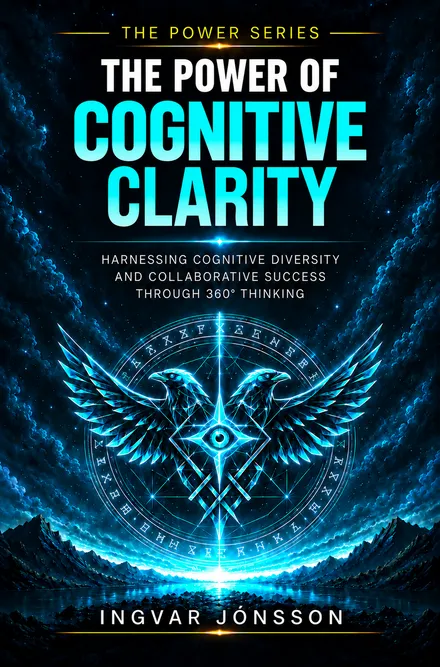
Four questions help you look at an issue from more angles before you decide. What? How? Who? Why?
360° Thinking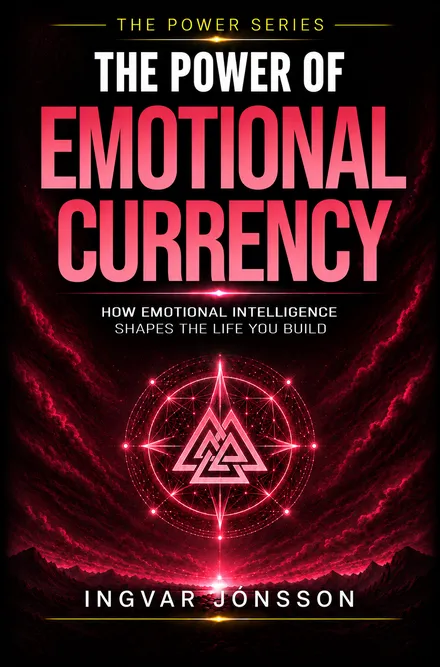
Helps you see how emotions affect communication and decisions, and discover that only you can change how you respond.
360° Emotional Intelligence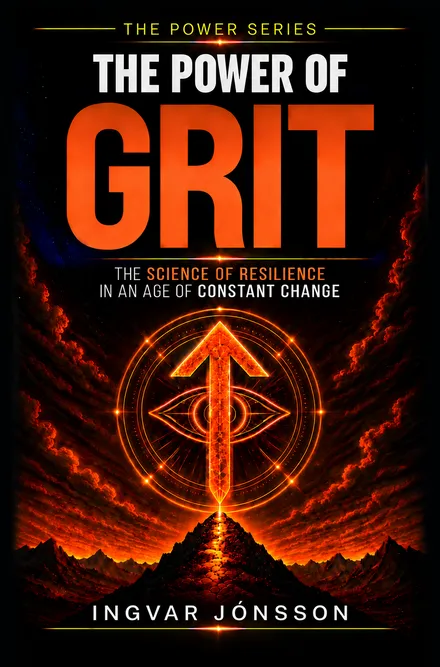
Explores how passion, perseverance, purpose and self-knowledge support long-term goals, and how codependency can weaken them.
360° Grit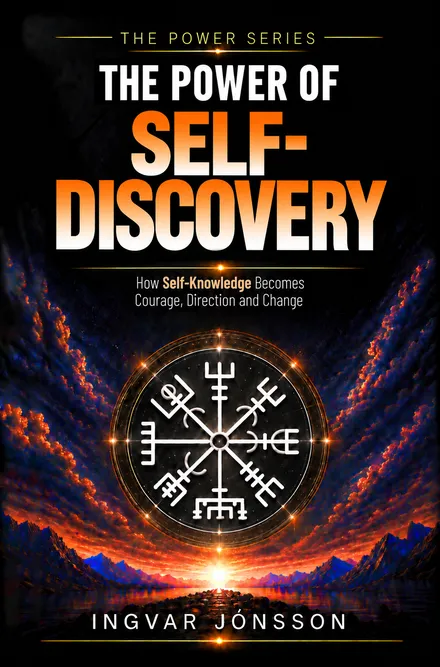
Helps you identify what matters to you and make decisions in line with it. The English edition of Hver ertu og hvað viltu?
360° Wellbeing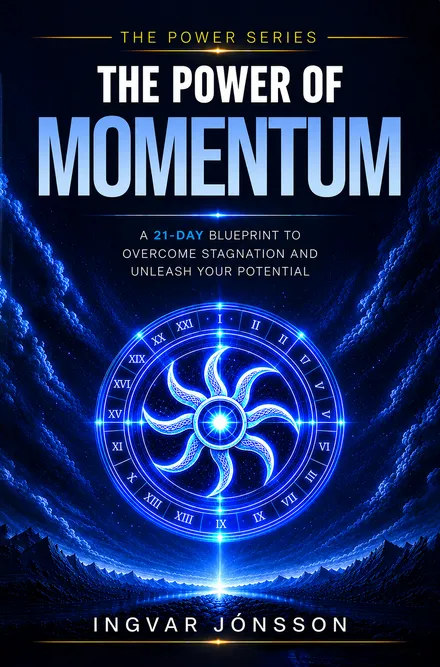
A 21-day plan that helps you get started and make new habits stick. The English edition of Sigraðu sjálfan þig!
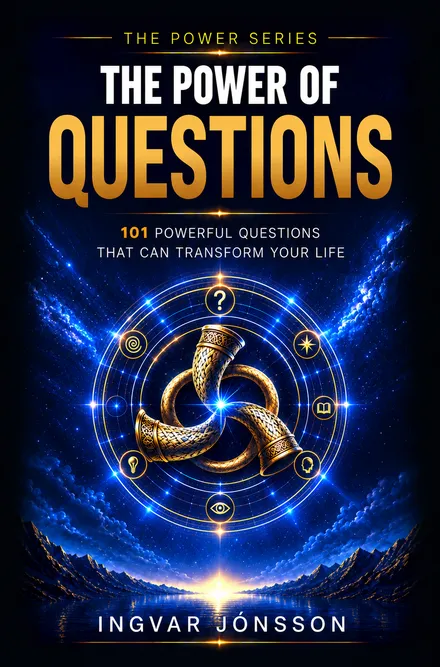
Shows how questions shape our lives and how we can take charge simply by finding the courage to ask the right ones.
Coach training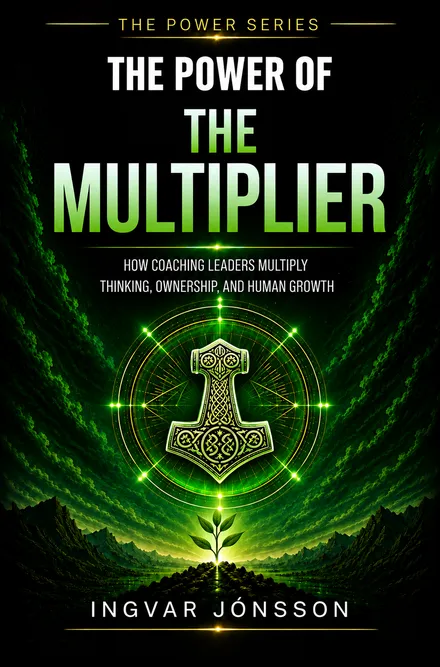
A guide for managers who want to empower their people through coaching conversations in daily work.
Empowering Leadership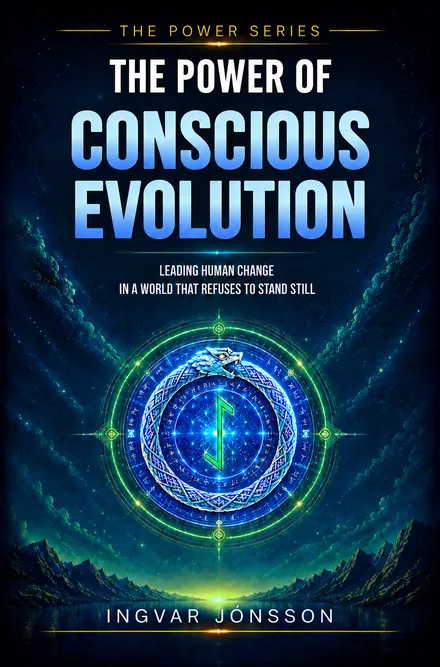
Explores how people can navigate and come through transformation in life and work in the age of AI.
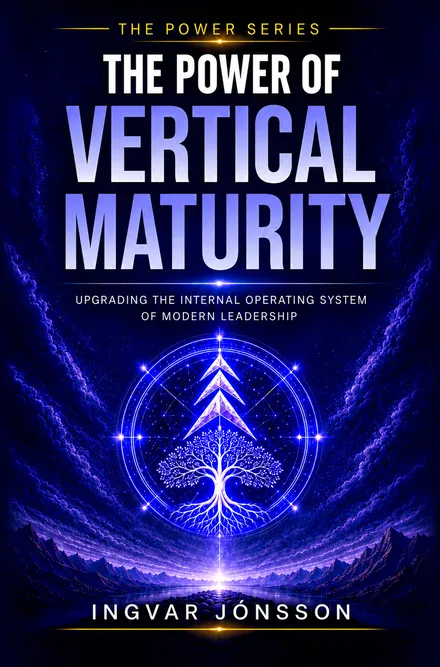
Explores how managers can broaden their horizons and make a conscious choice about their own growth and development at work.
The courses Profectus has run for us are unlike any others. They have a unique knack for making the complex simple and can always explain the purpose of what they teach.
These are the courses that have stayed with us the longest. Ingvar is an exceptionally entertaining and inspiring teacher, one of my favourites.
A great deal of material was covered in remarkably little time, without a dull moment. I can recommend Profectus without hesitation.
I have turned to Profectus for a range of courses for different groups of staff. The experience has been very good and the service is highly professional.
Testimonials translated from Icelandic.
Over eight teaching days you try out the role of a coach. You practise listening attentively, asking with curiosity and giving people room to think out loud. You learn to lead conversations that help people work out what matters and choose their next steps.
The next course starts on 5 February 2027Eight teaching days in three modules. Taught in Icelandic.
An open course for HR professionals, consultants, coaches and others who want to use 360° assessments in their work. You learn to interpret results from 360° Thinking, 360° Grit and 360° Wellbeing and use them in consulting and training. Once certified, you can offer the assessments in your own services and use ready-made talks and presentations under your own brand.
19–20 January 2027 · 08:30–16:30 both daysCourse fee ·
Tell us what you would like to improve in your workplace. We will review the situation with you and suggest the next step.
Home / Five steps
Five steps make sure time and money go into the needs the data confirms, and that the learning carries over into daily work. Profectus has worked by this process for about a decade.
When everyone gets the same content, part of the group sits through what it already knows while others don’t get what they need. The cost is the same, but the benefit is spread across fewer people.
Two teams can have the same overall score but a different weakest factor. They need different training.
The problem discussed most is not always the one holding the group back most. The baseline shows the difference.
Without a baseline and re-assessment, there is no way to say whether the training changed anything.
We review goals, current state and target groups with the HR team and managers. What should change, for whom, and how will we know it worked?
A written scope: goals, target groups and measures.
Determines which assessment fits in step 2.
The group takes the relevant assessment, for example the Workplace Assessment, 360° Thinking, 360° Grit or 360° Emotional Intelligence. Profectus interprets the results at group level.
A group summary and a priority list of the biggest gaps.
Determines content, focus and grouping in step 3.
Workshops or longer training shaped by the priority list. Exercises are chosen based on patterns in the group’s results.
A training plan and workshops aimed at confirmed needs.
Defines the exercises followed up in step 4.
Participants practise new skills in real projects. Support material, exercises and tools are available in Tankurinn, Profectus’s learning platform.
A practice plan, assignments between sessions and access to Tankurinn.
Provides progress data for the re-assessment in step 5.
The assessment is repeated, or the situation is reviewed with the HR team, and compared with the baseline.
A comparison with the baseline and a proposal for next steps.
The next round targets the factor that then weighs most.
The first conversation is about your current situation and what should change. From there we propose an assessment and scope.
Home / Workplace Assessment
An assessment of workplace culture and job satisfaction shows where the strengths lie and which factors fall below the threshold, by department and division. Three open questions add the employees’ own voice. Action then goes where it is needed.
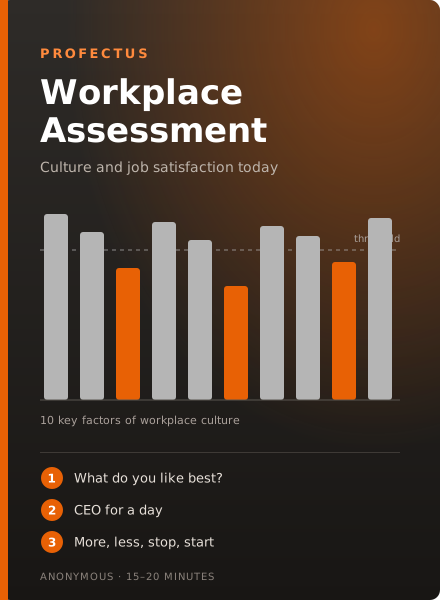
Ambitious work needs a healthy environment. Without an assessment of the real situation, it is easy to invest in actions that treat the symptoms rather than the root cause.
For each factor, the assessment shows whether the workplace is above or below the threshold.
Job satisfaction is measured with Paul E. Spector’s Job Satisfaction Survey, a recognised instrument that has been used to measure thousands of employees. The result shows the position on a three-level scale and is divided into nine sub-categories.
In addition to the ten key factors, employees answer three open questions. The answers provide deeper explanation and context for the results and are presented anonymously.
Helps identify the workplace’s perceived strengths and the qualities of the working environment that employees consider important to protect.
Draws on employees’ experience to highlight the changes they consider most urgent, which can support managers in setting priorities.
Helps turn employees’ experience into proposals on management behaviour that can be discussed, developed and followed up.
Confidentiality. The assessment is anonymous and responses cannot be traced to individual employees. Results are reported at group level.
Tell us about the size of your workplace and what you want to understand better. We will propose a scope and timing.
Home / 360° assessments / 360° Thinking
Usually it is neither willingness nor ability that is missing; people simply think differently. 360° Thinking shows how people prefer to think, and the workshop teaches the group to use those differences instead of colliding over them.
The assessment measures thinking preferences, not ability. Everyone uses all four quadrants, but each of us has a “favourite chair” and most readily asks the question that comes most naturally.
Every participant receives their own 360° Thinking results in a personal report. It belongs to them, and they can put it to good use at work and beyond.
No one else has access to a personal report unless the participant chooses to share it.
When a group takes the assessment together, a group map is produced from the combined results. It is used when working with the group, for example in courses and workshops.
The group map shows the overall picture of the group, never individual results.
A 4–6 hour workshop based on the book The Power of Cognitive Clarity. Offered only as a tailored workshop for organisations and shaped by the group’s results.
Participants take 360° Thinking. Profectus compiles the group results and gets a real challenge from the managers.
The quadrants, the clashes between them and four questions applied to a real decision.
Chosen as needed: running meetings with the four questions, or how the eight dimensions respond to change.
Each participant chooses how to use the insight in their next decision. A short review with the HR team.
No two workshops are the same. Each one is tailored to the needs analysis and the group’s results, so the agenda below is for guidance only.
Outcome: The group’s strengths are visible, and it has a vocabulary to point back to them when things get harder later in the workshop.
Outcome: The group knows which perspectives are strong, which are thinly represented and which voices are therefore heard less often.
Outcome: The group has said out loud how the dominant thinking style shapes decisions, what it has cost and which strengths it can make better use of.
Outcome: One real decision has been examined from every angle, and the group knows which question it skips most often.
Outcome: The insight has become a dated commitment, not just a good intention.
Confidentiality. We work with group-level summaries. No conclusions are drawn about individual employees from averages, and each person decides what they share from their own report.
“Most of what passes for personality conflict in adult life is not personality.”
“Cognitive clarity is not the disappearance of your strongest current. It is the wisdom to keep it, deepen it, and stop letting it have the last word.”
Tell us about the group and the challenge. We will propose a scope, preparation and timing.
Home / 360° assessments / 360° Grit
Long-term projects rarely stall on day one. They stall when the enthusiasm is gone and routine takes over. 360° Grit shows which aspect of perseverance is holding the group back, and the workshop works on it.
Passion, perseverance and purpose are the three legs of the stool. Self-knowledge multiplies the effect, while codependency divides it.
At team level, the assessment shows which dimension limits the group as a whole. An individual can compensate for a weak dimension; a whole team rarely can.
Every participant receives their own 360° Grit results in a personal report. It belongs to them, and they can put it to good use at work and beyond.
No one else has access to a personal report unless the participant chooses to share it.
When a group takes the assessment together, a group map is produced from the combined results. It is used when working with the group, for example in courses and workshops.
The group map shows the overall picture of the group, never individual results.
A 4–6 hour workshop based on the book The Power of GRIT. The group works with real long-term goals and learns to tell sensible perseverance apart from pressing on down the wrong path.
Participants take 360° Grit and bring one real long-term goal from their work.
The equation, the eight dimensions, the group map and work on goals, obstacles and tension pairs.
Chosen as needed: codependency and boundaries, energy management or considered courage.
Weekly commitments, support material and re-measurement for comparison with the baseline.
No two workshops are the same. Each one is tailored to the needs analysis and the group’s results, so the agenda below is for guidance only.
Outcome: The group sees which strengths have carried it through adversity and can point back to them later in the workshop.
Outcome: The group knows where its strengths lie and which factor limits it as a whole.
Outcome: The group has separated what is in each person’s power from what managers need to fix, and knows which strengths it can use in the meantime.
Outcome: Each person has made a conscious decision to keep, change or drop the goal.
Outcome: The long-term vision now has a weekly rhythm, and someone will ask how it is going.
Confidentiality. Focus areas are chosen from group averages and spread where the data allows. No conclusions are drawn about individual employees from averages.
“Perseverance without the multiplier is a high-thrust engine pointed at the wrong horizon.”
“Resilience, in this reading, is the outcome of conditions that can be installed rather than a property of remarkable individuals.”
Tell us about the group and the long-term projects that matter. We will propose a scope and timing.
Home / 360° assessments / 360° Emotional Intelligence
Unspoken feedback, difficult conversations that get postponed and decisions made in a bad mood cost more than they seem. 360° Emotional Intelligence shows where the group’s emotional intelligence is strong and which factor is holding it back.
Emotional intelligence is not a single trait. It is a system in which one narrow factor can restrict everything that follows.
Every participant receives their own 360° Emotional Intelligence results in a personal report. It belongs to them, and they can put it to good use at work and beyond.
No one else has access to a personal report unless the participant chooses to share it.
When a group takes the assessment together, a group map is produced from the combined results. It is used when working with the group, for example in courses and workshops.
The group map shows the overall picture of the group, never individual results.
A 4–6 hour workshop based on the core of the book The Power of Emotional Currency. Self-awareness, emotional regulation, empathy and communication skills linked to real situations such as difficult conversations and feedback.
Participants take 360° Emotional Intelligence. Managers name typical difficult conversations and feedback situations from their work.
The eight layers, the group map and practice in difficult conversations and feedback.
Chosen as needed: decisions under pressure, resilience, or boundaries when helpfulness stops helping.
Each person chooses one conversation to have and follows it up with a short reflection.
No two workshops are the same. Each one is tailored to the needs analysis and the group’s results, so the agenda below is for guidance only.
Outcome: The group sees that it knows more about difficult conversations than it thinks, and has strengths to point back to later in the workshop.
Outcome: The group knows which layers it can build on and which factor holds back its communication and decisions the most.
Outcome: Avoidance patterns have been named without pointing at individuals, their cost assessed, and the group sees which strengths it has for having these conversations.
Outcome: Each participant has rehearsed one conversation that matters to them and knows what they are going to say.
Outcome: A commitment to have the conversation, with a deadline.
Confidentiality. Focus areas are chosen from group averages and spread where the data allows. No conclusions are drawn about individual employees from averages.
“Every honest thing you do not say goes somewhere. It does not evaporate because you decided to be the bigger person.”
“The person receiving your impact does not live inside your intention.”
Tell us about the group and the conversations that are hardest. We will propose a scope and timing.
Home / 360° assessments / 360° Wellbeing
Heavy pressure can deliver results for a while, but not in the long run. 360° Wellbeing shows how eight key factors of wellbeing form a whole that is easy to work with and strengthen, so that performance becomes sustainable.
The assessment gives an overall picture rather than a single number. It shows where the group is strong and where the pressure shows.
Every participant receives their own 360° Wellbeing results in a personal report. It belongs to them, and they can put it to good use at work and beyond.
No one else has access to a personal report unless the participant chooses to share it.
When a group takes the assessment together, a group map is produced from the combined results. It is used when working with the group, for example in courses and workshops.
The group map shows the overall picture of the group, never individual results.
The results support decisions about workload, priorities and support, and show which factors most affect the group’s wellbeing and performance.
360° Wellbeing can be used on its own or together with 360° Thinking and 360° Grit. Together they show how people think, where their stamina lies and whether it comes at the expense of wellbeing.
Confidentiality. Wellbeing is personal. We work with group-level summaries, no conclusions are drawn about individual employees from averages, and each person decides what they share from their own report.
A four-hour workshop built on 360° Wellbeing. It is well suited to a staff development day when the organisation wants to increase engagement and strengthen employees’ ownership of their own ideas, so they feel they have a voice that is listened to.
Participants take 360° Wellbeing. Profectus compiles the group results and agrees with managers how they will take part and respond to proposals.
The group picture, the elephant in the room and employee-owned proposals that managers respond to on the spot.
Fits well into a staff development day, for example in the morning or afternoon, and gives the day a clear outcome.
A short status update on the proposals after 30 and 90 days, and re-measurement for comparison with the baseline.
No two workshops are the same. Each one is tailored to the needs analysis and the group’s results, so the agenda below is for guidance only.
Outcome: The group’s strengths are visible, and it has a shared vocabulary for wellbeing that goes beyond “how are you?”.
Outcome: The group knows its strongest and weakest factors and owns the interpretation; it was not handed to them.
Outcome: What is discussed in the coffee room is out on the table in a safe way, sorted by whether it is in the hands of the group, the managers or neither.
Outcome: Three to five proposals owned by employees, each with an owner and a first step that can be taken within 30 days.
Outcome: Every proposal has a clear answer or a date for one. Employees see that they were heard.
Outcome: Responsibility is clear: who does what, and when the group will next hear about progress.
A voice only matters if it is heard. Managers take part in the second half of the workshop and commit in advance to respond to every proposal, either on the spot or by a set date. Without that commitment, it is better to skip the workshop.
Confidentiality. Wellbeing is personal. We work with group-level summaries and anonymous input. No conclusions are drawn about individual employees.
“Part of self-discovery is learning to sort the cargo: what strengthens you, what burdens you, and what was never yours to carry.”
“You may begin to believe that life is the problem when, in fact, the engine has been running for years without proper maintenance.”
Tell us about the group and the situation. We will propose a scope, delivery and timing.
Home / Coach training
Over eight teaching days you try out the role of a coach. You practise listening attentively, asking with curiosity and giving people room to think out loud. You learn to lead conversations that help people work out what matters and choose their next steps.
The programme suits managers who want to coach their people as well as those who want to work as coaches or deepen their own self-knowledge.
Visual teaching with hundreds of illustrations by the artist Jim Ridge instead of dry text slides.
You work closely with fellow students in support groups between modules.
You coach external clients for at least 12 hours to ground your knowledge.
Four mentor sessions with a teacher to work through obstacles and get answers.
On completion you are a “Certified coach” with an 80-hour ICF-accredited foundation programme. Completing the programme does not automatically give you a personal ICF credential (ACC). That requires, among other things, ten mentor sessions, four of which are included, and logged coaching experience in line with ICF requirements.
Eight teaching days in three modules.
Prices and payment terms are shown as on the current website and will be confirmed before publication. Registration is subject to the Profectus terms and conditions.
The programme’s teachers are credentialed by the International Coaching Federation (ICF).
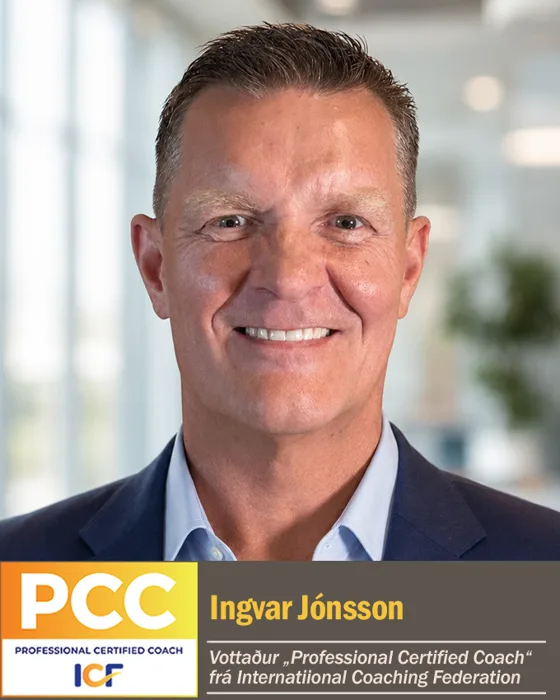
MBA from CBS, NBI Master Trainer and EQ-i Practitioner. Has written and developed almost all of Profectus’s course material.
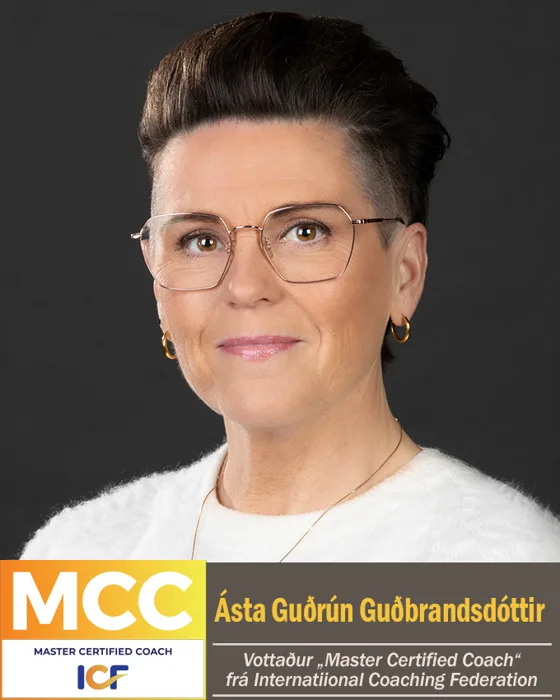
The third Icelander to earn the ICF MCC credential and a mentor coach since 2015.
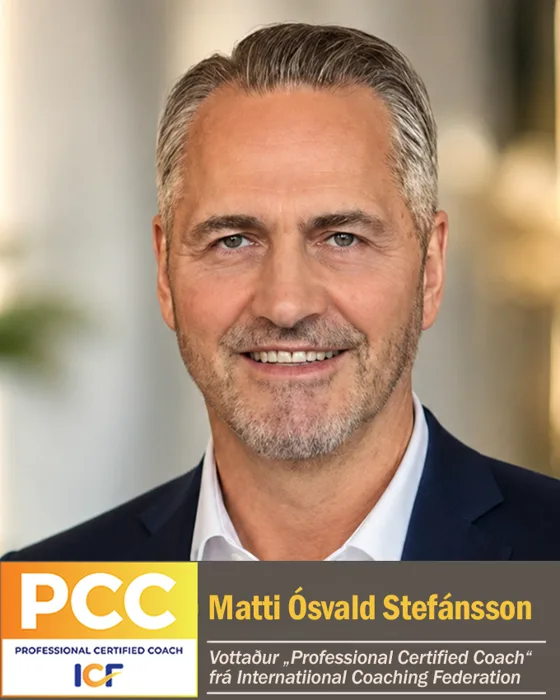
Has taught in both foundation and advanced coach training for more than a decade.
The next course starts on 5 February 2027. Eight teaching days in three modules. Fill in the form and we will contact you with a confirmation.
Thank you. We will contact you to confirm your place and send further information.
Preview: the registration is stored under the reference number above. Email confirmation will be active once form handling is connected.
Course registration is separate from the newsletter. Information is not sent to web analytics. See our privacy policy.
Home / Empowering Leadership
Managers’ biggest challenges are rarely about processes. They are about people: resistance to change, lack of alignment and conversations that never happen. Empowering Leadership is an action-oriented programme in which managers put what they learn into practice at work while the programme is running.
The programme is for people with formal or informal management responsibility, or who are responsible for the work, communication, results or growth of others. There is a strong emphasis on self-knowledge and communication skills.
The programme is largely based on the book Leiðtoginn – valdeflandi forysta (The Leader – Empowering Leadership) by Ingvar Jónsson and on the social sciences.
Strengths as a leader, values, horizontal and vertical leadership development, leading across generations and engagement at work.
How different leaders think, the eight dimensions of thinking and tools for micro-coaching and running meetings. Based on NBI assessments.
An EQ-i 2.0 assessment and a detailed report on strengths and growth opportunities across all areas of emotional intelligence.
ICF core competencies, the coaching conversation, questioning, listening and feedback, and how coaching leadership is embedded in the workplace.
Leading versus managing change, energy and stress management, and Kotter’s eight steps with a cross-functional leadership team.
The whole group meets for discussions and tasks that require active participation.
Before and between modules there is self-study in Tankurinn: teaching videos, assignments and self-assessment. Access for 12 months after the programme.
A coaching conversation with a teacher and feedback on performance in the programme and in the leadership role.
Try, observe, evaluate and embed. Participants try out new skills in real situations between modules.
An EQ-i 2.0 emotional intelligence assessment and NBI assessments of thinking and leadership style. These are different from the 360° HPM assessments.
The books Leiðtoginn – valdeflandi forysta and Sigraðu sjálfan þig – aftur og aftur, and a card deck of values, strengths, emotions and powerful questions.
We will go through the programme, how it can be adapted to your needs and possible timing. Choose an introductory meeting, a phone call or more information.
Home / 360° HPM certification
What happens when people get a clearer picture of how they think, how they respond to adversity and how they look after their own wellbeing? In this practitioner training you learn to interpret results from three assessments and use them in conversations that help people choose what to develop and how to begin.
The course is open to HR professionals, consultants, coaches, managers and others who want to use assessments in their work. You can apply them in one-to-one consulting, use them to choose the focus of a workshop or build on them in career development conversations.
Why do two people approach the same task in different ways?
360° Thinking shows which perspectives people turn to first when they process information, solve problems and make decisions. The assessment maps eight dimensions of thinking style and gives people a vocabulary for discussing different routes to the same challenge.
In a workshop you might, for example, help a team understand why some want to see the data before a decision is made while others want to start by exploring the options. By using both perspectives, the team can examine the issue more thoroughly before choosing a path.
What helps people keep going when it gets hard?
The grit assessment looks at how people sustain interest and stamina, cope with adversity and respond when plans don’t work out. The results highlight strengths people can build on and factors they can develop, such as self-discipline or the ability to adapt how they work.
In consulting you might, for example, use the assessment with a manager who finds it easy to set a clear direction but harder to follow through when urgent tasks take over. The results give you a basis for discussing where the problem lies and which strengths could help address it.
What gives people energy, and where might support be needed?
The wellbeing assessment gives an overview of eight factors of wellbeing, including physical energy, emotional balance, relationships, purpose, occupational health and rest. The results help people see how these factors connect in daily life and choose where a change could matter most.
If a client describes a lack of energy at work, for example, the assessment can help you explore whether the conversation should start with working conditions, rest or other factors affecting their wellbeing.
You take the three assessments yourself and experience what it is like to receive your own results. In the training you learn to choose an assessment to suit the challenge, read and interpret the reports and lead a conversation about what the results draw attention to. You practise giving feedback and helping the client shape their next steps.
Included are 15 practice assessments, five of each type, for practising interpretation and feedback.
Profectus is the Master Trainer for 360° HPM in Iceland and is authorised to train and certify independent consultants. When you have completed the course and passed the final exam, you receive 360° HPM Basic 3 certification and the right to offer the three assessments to your clients.
19–20 January 2027 · 08:30–16:30 both days
Course fee ·
Fill in the form below. We will contact you with a confirmation and further information about the course.
Thank you. We will contact you with a confirmation and further information about the course.
Preview: the registration is stored under the reference number above. Email confirmation will be active once form handling is connected.
The information is only used for your registration. See our privacy policy.
Home / Terms and conditions
English translation for information. In case of any discrepancy, the Icelandic version prevails.
These terms apply to purchases on the website www.profectus.is, owned by Profectus ehf., ID no. 410304-3760, Strandgata 11, 220 Hafnarfjörður, Iceland – referred to in these terms as Profectus. The terms define the rights and obligations of Profectus on the one hand and the buyer on the other. “Seller” means a company offering goods or services for sale on profectus.is. “Buyer” means an individual who is party to the contract but is not engaged in business or other commercial activity, i.e. an individual who buys goods or services within the meaning of the Icelandic Consumer Sales Act No. 48/2003. Prices on the website include VAT where applicable, according to available data and information from the seller, and are published subject to typing, printing and image errors. Shipping costs are not included for goods sent to buyers; this does not apply to services, programmes or courses that the buyer attends in person.
Profectus processes personal data in accordance with the Icelandic Act No. 90/2018 on Data Protection and the Processing of Personal Data. Personal data received by Profectus is recorded electronically in Profectus’s database, and only the system administrator has access to it. Personal data is never provided to third parties. When purchasing goods or services, the buyer consents to Profectus collecting and processing personal data from the company’s database. Processing continues for as long as the buyer does not object to it. If the buyer wishes to comment on the handling of personal data or asks for their personal data to be deleted from the database, they should contact Profectus by email at info@profectus.is or by post at Strandgata 11, 220 Hafnarfjörður, Iceland. The buyer’s information will then be deleted from the database and the buyer informed of this separately.
Profectus reserves the right to use personal data to send customers marketing messages by email and/or SMS, in order to provide customers with the best possible service. No cookies are set to offer personalised advertising. Profectus does not collect any information for marketing purposes, neither to sell advertising nor for profit.
By paying, the buyer confirms that they are aware of Profectus’s current terms. Each purchase is binding on the buyer in accordance with Profectus’s terms and conditions. If goods are to be sent to the buyer, Profectus undertakes to post them within three working days. If the goods are not in stock, the buyer is informed within three working days and offered a refund if they prefer that to waiting for the goods to become available again.
To complete registration for a programme or course, the customer must pay a 10% deposit and state how they intend to pay the remaining course fees. The deposit for a programme or course is always non-refundable. Payment of the balance must be made or agreed no later than 14 days before the programme starts. If this is not done, Profectus will consider that the customer does not intend to take part and has given up their place. Profectus may then sell the place to someone else.
Non-defective goods can be returned within 30 days against a receipt or equivalent proof of purchase, such as a card statement or a Profectus label. Goods must be returned in saleable condition, both in content and packaging. For returned goods in saleable condition, Profectus will refund the customer. Returns should be notified to info@profectus.is. Please note that when goods are returned, the buyer is responsible for them until they reach us. The buyer pays the shipping costs for returns. Returned goods must be sent to Profectus’s address.
The refund amount is the price shown on the receipt. If there is no receipt, the refund amount is the price applicable in the shop on the day of the return. Goods cannot be returned if they have been discontinued by Profectus, specially ordered or have expired. Shipping costs are not refunded. Course deposits are not refunded.
If a customer has received damaged or incorrect goods, they should inform us at the first opportunity, and we will take full responsibility. If goods are defective, the customer is offered a replacement and we pay all related shipping costs, or refund if requested. Otherwise, reference is made to the Icelandic Consumer Contracts Act No. 16/2016 and the Consumer Sales Act No. 48/2003. If goods are proven to be defective, they can be returned against a receipt or equivalent proof of purchase, such as a card statement or a Profectus label. Defective goods can be exchanged for new ones or fully refunded.
Please note that if a customer cancels their participation in a Profectus programme or course within two weeks before it starts, the customer has no right to a refund of either the course fee or the deposit. If the student has not paid the course in full within two weeks before it starts, they will nevertheless be required to pay in full.
If a student has paid for a programme or course in part or in full and withdraws within two weeks before it is due to start, or after it has started, they may register for a comparable programme within two years and use what they have already paid as payment. If the price of the programme or course has increased in the meantime, the student must pay the difference. All of the above must be agreed with Profectus and applies only if the course in question is not fully booked when it starts.
The seller promises the buyer full confidentiality regarding all information the buyer provides in connection with the transaction. Information will not be handed over to third parties under any circumstances unless required by law. You agree to provide current, complete and accurate information for all purchases made in the shop, including your email address, credit card number and expiry date, so that we can complete your transaction and contact you as needed.
This agreement is governed by Icelandic law. Any dispute arising from it shall be brought before the District Court of Reykjanes.
Profectus ehf., ID no. 410304-3760, Strandgata 11, 220 Hafnarfjörður, Iceland, info@profectus.is, phone +354 565 9111.
When you send an enquiry or register for a programme or course, we receive the information you enter in the form, such as your name, email, phone number, workplace, job and message. If you choose to have your employer pay, we also record the company name and an email address for the invoice.
The information is only used to respond to your enquiry, complete your registration and contact you about it. Newsletters are only sent to people who have specifically asked for them.
Personal data from forms is not sent to web analytics. No cookies are set to display personalised advertising.
Information is not sold or passed on to third parties unless required by law. It is kept for as long as needed for the enquiry or registration.
You can request access to, correction or deletion of your information by emailing info@profectus.is. If you believe the handling of your information breaches the law, you can contact the Icelandic Data Protection Authority (Persónuvernd).
This page no longer exists or has been moved. Here are the main ways forward.